
How Can I Create a Low-Maintenance Front-Yard Privacy Screen That Looks Welcoming?
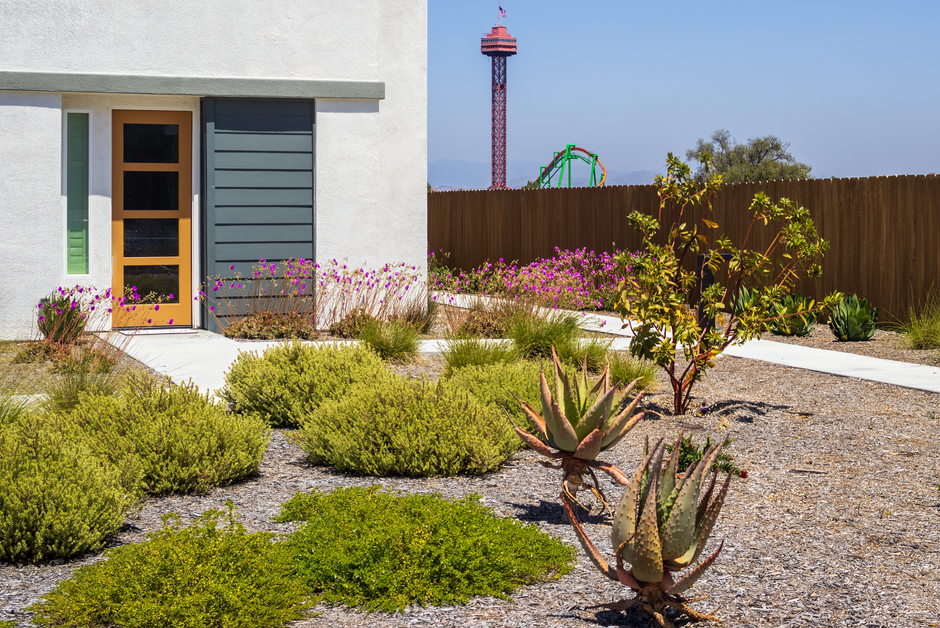
Create a welcoming, low-maintenance front-yard privacy screen by mapping the unwanted views first, then using a layered mix of appropriately spaced trees or shrubs, ornamental grasses, and low edge plants. Keep the entry, windows, and driver sight lines open; choose plants for their mature size and local conditions; and use evergreen structure only where year-round coverage truly matters.
The goal is not a green wall. It is a controlled view: less exposure into living areas, less visual noise from the road, and a front door people can still find without hesitation. Start with the view you want to interrupt, not a plant list.
How can I make my front yard more private without building a tall fence?
You can make a front yard more private without a tall fence by building a staggered, layered screen around specific sight lines instead of sealing off the entire property. This approach puts screening where it earns its space and leaves the porch, walk, and entry readable from the street.
Run the sightline drill before planting. Stand where pedestrians, drivers, and neighbors most often see the yard. Then look toward the windows, seating areas, or other spaces you want to soften. Washington State University Extension recommends using wooden stakes or ladders to determine the precise screen locations and preferred height. That simple test prevents a costly mismatch: plants that look adequate from the porch but fail from the sidewalk.
- Mark the target view. Place stakes where the screen needs to begin and end, rather than drawing one unbroken line along the lot.
- Test height before buying. Raise a temporary marker until it blocks the selected view. Check it from the road, sidewalk, front door, and driveway.
- Choose the barrier type by constraint. Use a fence or evergreen shrubs when immediate, dense screening matters; use a natural hedge when the site has room and you can wait for growth; use vines on a trellis where the space is tight.
- Protect circulation. Keep the entrance visible and do not crowd a front walk. NC State Extension states that a front walk should be at least 4.5 feet wide for two people to walk side by side.
Privacy can also arrive in stages. Washington State University Extension describes a sequence of a low flower-bed buffer, a physical barrier such as a berm or terrace wall, and a living screen as plants mature. The practical payoff is clear: the landscape can do some screening now without forcing every plant to perform at full size on day one.
Check homeowner-association and local requirements before committing to a barrier, and preserve drivers' sight lines. A screen that hides the room but creates a driveway blind spot is not a finished plan.
What plants provide privacy from a road but still look welcoming?
Plants that provide road privacy while still looking welcoming are mixed, staggered groupings with taller backdrop plants, medium shrubs, and grasses or groundcovers at the edge. The street sees depth and texture instead of a single rigid row; you get screening without making the property read as closed.
University of Maryland Extension recommends a layered structure: larger plants in back, medium-height plants in front and between them, and ornamental grasses or groundcovers around the perimeter. Clemson Cooperative Extension adds that offset rows fill gaps between individual plants, while clusters of 3, 5, or 7 or more can block a selected view without closing off the entire yard.
| Screening need | Useful plant role | What to check |
|---|---|---|
| Year-round coverage | Predominantly evergreen shrubs or a fence | Whether the mature width fits the site |
| Seasonal road screening and texture | Switchgrass, big bluestem, or yellow Indiangrass | Full sun and the mature height of the selected grass |
| Winter interest without full evergreen coverage | Dense-branched deciduous shrubs | Branch structure after leaves drop |
| Low foreground edge | Groundcovers or smaller grasses | Whether they preserve views of the entry and walk |
For a sunny, well-drained site, Penn State Extension identifies big bluestem as a privacy screen or backdrop and says established big and little bluestem are low-maintenance and not prone to disease or insect pests. Big bluestem reaches 4-8 feet with flower stems and is hardy in USDA Plant Hardiness Zones 3 through 9. Its old growth is cut to the ground in late winter or early spring. That is a defined seasonal task, not ongoing shaping.
Deer pressure changes the shortlist. Rutgers Cooperative Extension rates American holly, arrowwood viburnum, bayberry, big bluestem, blue fescue, and blue-mist shrub as rarely damaged. Treat that rating as risk reduction, not immunity: Rutgers explicitly cautions that no plant is deer proof and conditions vary with local deer populations and weather.
Weak plan: choose one fast-growing plant and repeat it across the entire frontage. Stronger plan: repeat a few compatible species in offset groups, with the tallest material behind and the lowest material nearest the street. A mixed screen is more resilient to drought, flooding, pests, and disease than a single-species row, according to University of Maryland Extension.
How deep should a front-yard privacy planting bed be?
A front-yard privacy bed should be deep enough to hold staggered layers at each plant's mature dimensions, not squeezed into a narrow strip that forces constant pruning. The exact depth depends on the plants you select, so establish the mature spread first and draw the bed around that requirement.
Start with the back layer, then reserve room for a middle layer and a low perimeter layer. Clemson Cooperative Extension advises that spacing follow mature dimensions because overcrowding increases shading, root competition, and conditions favorable to plant disease. Washington State University Extension advises at least 2 feet between screen plants, preferably 3 feet or more, to reduce root crowding, though slender plants may need closer spacing to fill slowly.
Use the mature-size math near the house. NC State Extension recommends installing plants half their mature width plus at least 1 foot away from a building. A shrub expected to mature 5 feet wide, for example, belongs 3.5 feet from the structure. That one calculation protects walls, windows, access, and your future weekend from a pruning problem created at planting time.
Finish the bed with mulch, but do not overdo it. University of Maryland Extension recommends mulch no more than 2-3 inches deep and says it should not touch tree trunks. Native plants can also reduce ongoing inputs after establishment because they are adapted to local soils and climate.
The common mistake is planting for the nursery-sized plant. The replacement behavior is simple: label each selection with its mature height and width, lay out those dimensions with stakes, and only then decide whether the bed needs to expand, the plant count needs to fall, or the screening goal needs to become more selective.
Run this week's drill: from the street, identify one window or seating area that needs screening. Mark its sight line, test a temporary height with stakes, and sketch three layers that preserve the entry. If the mature widths do not fit on paper, they will not fit in the ground.
Frequently Asked Questions
Which privacy plants are low maintenance and deer resistant?
Big bluestem, American holly, arrowwood viburnum, bayberry, blue fescue, and blue-mist shrub are listed by Rutgers as rarely damaged by deer. No plant is deer proof, so use these as stronger starting options rather than a guarantee. For sun and well-drained soil, Penn State Extension identifies established big bluestem as low-maintenance and not prone to disease or insect pests.
Can ornamental grasses give privacy in a front yard?
Yes. University of Maryland Extension lists switchgrass at 3-6 feet, big bluestem at 2-6.6 feet, and yellow Indiangrass at 4-8 feet as deer-resistant grass options for a privacy planting. Use grasses as a perimeter or middle layer, not as a substitute for evergreen structure when you need dense year-round screening.
How do I screen my living-room windows from the street?
Stand at the street and identify the exact sight line to each window, then use stakes or a ladder to test the height that interrupts it without hiding the front entry. A staggered cluster of plants can block that selected view without closing the whole yard, and lower foreground plants keep the planting from reading as a wall.
Sources
- University of Maryland Extension: Plants for Mixed Privacy Screens
- NC State Extension Publications: Landscape Design
- Clemson Cooperative Extension: Mixed Screens
- Washington State University Extension: Living Privacy Screens
- Penn State Extension: Big Bluestem and Little Bluestem
- Rutgers Cooperative Extension: Deer-Resistant Plants
Read next
Choose the Right Riding Mower Deck Width for Your Yard
Choose a 42-, 48-, or 54-inch riding mower by measuring access, obstacles, slopes, and the real time savings of a wider deck.
Which Drainage Fix Is Right for My Soggy Front Yard?
Choose between regrading, a rain garden, dry creek bed, and French drain by tracing where front-yard water starts and where it can safely go.