
How Much Buffet Food Should I Order for a Wedding With Dietary Restrictions?
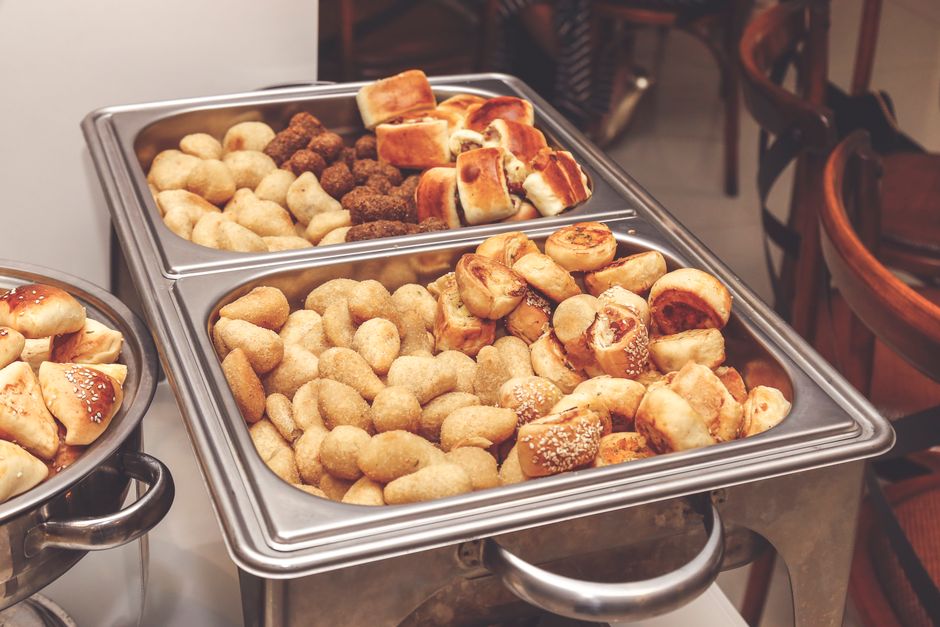
Order a traditional wedding buffet for every confirmed guest, then discuss a 5-10% overage with your caterer when attendance is uncertain, dinner is the main event, service is long, or menu choices are limited. Collect allergy and dietary needs before final numbers, label every dish, use separate utensils, and arrange separately prepared and delivered meals for guests whose allergies make buffet cross-contact unsafe.
How much food should I order for a wedding buffet per person?
For a traditional buffet, order for the full expected guest count. The University of Houston-Downtown Catering ordering guide treats buffet portions as covering an entree, sides, and accompaniments for each expected guest. Start there. Do not turn a precise headcount into a guesswork exercise.
The better question for your caterer is not, “Can we order less?” It is, “What does this package serve, and what is included in that serving?” A tasting is useful here: Georgia Tech notes that tastings can confirm real serving sizes, including situations where lunch guests take half a sandwich because sandwiches are cut in half.
| Planning situation | Ordering move |
|---|---|
| Traditional buffet with a reliable final count | Order for every expected guest. |
| Mixed group or uncertain attendance | Discuss about 5% extra food. |
| Large appetites | Discuss 5-10% above expected attendance. |
| Lunch or dinner, long service, limited menu, or food as the main attraction | Consider 5-10% more food. |
| Pre-meal appetizers | Plan 2 pieces per guest for each hors d'oeuvre selection. |
These are planning rules from the University of Houston-Downtown guide, not a substitute for the caterer's package-specific portions. Keep the distinction clean: the guest count drives the order; the menu and service conditions determine whether a controlled overage is sensible.
Service style changes the outcome. Marquette University Event Services says guests tend to eat less when appetizers are passed than when food is displayed buffet-style. That means a buffet can require more food than a passed-appetizer reception even when the guest list is identical. Do not use a reception formula to price a meal buffet.
Do I need to order extra food for a buffet wedding?
Yes, sometimes, but extra food should be a deliberate buffer rather than a reflex. The University of Houston-Downtown recommends considering 5-10% more when attendance is uncertain, the event falls at lunch or dinner, food is the main attraction, service lasts several hours, menu choices are limited, or you would rather have a small amount left than run short.
Run the Count, Conditions, Caterer check. First, count confirmed guests plus every staff member or volunteer who will be served. Georgia Tech specifically advises including staff and volunteers in the meal count. Second, identify the conditions that increase demand. Third, ask the caterer what overage is already built into its plan before paying for additional food.
There is a real tension to manage. Georgia Tech notes that events may see 5-15% attrition while also producing a few walk-up guests. That is why a raw invitation count is the wrong number to order against. Use RSVPs for the base, then have a short conversation with the caterer about likely no-shows, walk-ups, and its planned overage.
Use this message when you ask: “Our confirmed meal count is [number]. Which portions are included in this buffet, what overage do you already plan, and which event conditions would justify adding 5% or 10%?” It gives the caterer the inputs needed to answer instead of asking for a vague reassurance.
How do I account for children and unexpected wedding guests?
Account for children and unexpected guests by separating the decisions instead of treating them as one mystery number. Confirm with the caterer how children are counted within the selected menu, then include all adults, staff, and volunteers who will eat in the working meal count. Public guidance in the supplied sources does not provide a universal child buffet portion or a fixed walk-up number, so ask your caterer for its package-specific rule.
For unexpected attendees, use the overage conversation rather than quietly ordering a second full meal for every possible guest. Georgia Tech's warning about both attrition and walk-ups supports a targeted buffer, while the University of Houston-Downtown guide supplies the 5-10% range for uncertain attendance and higher-demand conditions.
Dietary needs need their own count. Add an RSVP prompt such as: “Please list any food allergy or dietary need, and tell us whether it requires a separately prepared meal.” Send the responses to the caterer in one list, then confirm each guest's plan before the final order. This reduces the cognitive load for the couple, venue, and guest at the same time.
Georgia Tech recommends asking about special dietary needs and communicating them clearly to the caterer, while also choosing menu variety appropriate to cultural or religious requirements. Give guests a direct answer, not an assumption. For guests making health-related meal decisions, a clear menu can also make it easier to follow everyday guidance such as What Is a Healthy Weight After 65?.
Set the allergy-service plan before the wedding day
Food allergy planning is not solved by placing a small card beside a tray. According to Food Allergy Research & Education, cross-contact happens when allergenic proteins transfer to another food, and even an amount too small to see can cause a reaction. Cooking does not remove that risk.
- Collect specifics. Ask about allergies before the event and retain ingredient information or label photos, as FARE advises.
- Confirm the kitchen process. Ask whether there is a separate preparation area, dedicated cutting boards and utensils, and non-shared grills or fryers.
- Protect the safe meal. Have it labeled and delivered separately rather than relying on an open buffet line.
- Control the buffet. Use a separate container and serving utensil for each safe dish, provide enough for seconds, and let guests with food allergies serve themselves first.
FARE is clear that merely wiping a knife, spatula, or surface is insufficient; equipment and utensils for allergen-free food must be cleaned with hot, soapy water. That is the difference between an allergy note and an allergy plan.
Food safety also needs an operating plan. The U.S. Food and Drug Administration says hot buffet food should stay at 140 F or warmer and cold food at 40 F or colder. If cold food will be on the buffet longer than 2 hours, place serving dishes on ice. The FDA also advises using small platters and replacing nearly empty dishes with fresh ones instead of adding new food to old dishes.
Frequently Asked Questions
Should wedding guests list food allergies on the RSVP?
Yes. Ask about food allergies and dietary needs on the RSVP, then give the responses to the caterer before the menu and final count are locked. FARE recommends asking before the event and retaining ingredient packaging or label photos so ingredient information can be shared accurately.
How can I prevent cross-contact at a wedding buffet?
Use a separate container and serving utensil for each allergy-safe dish, label every dish, and let guests with food allergies serve themselves first. Ask the caterer about separate preparation areas, dedicated equipment, and non-shared grills or fryers; wiping utensils or surfaces is not enough.
What dietary-restriction options should every wedding menu include?
There is no universal list that fits every wedding. Start with the restrictions guests report, then ask the caterer for clearly identified options that match those needs and any cultural or religious requirements. Georgia Tech recommends wide menu variety and clear communication of special dietary needs to the caterer.
Before the final catering call, run this five-minute drill: write down the confirmed count, list every person who will be fed, mark the conditions that justify an overage, and read each allergy-service step aloud with the caterer. If a guest asks, “What can I safely eat?” your team should have a specific answer before the buffet opens.
Sources
- University of Houston-Downtown Catering Ordering Guide for Clients
- Georgia Institute of Technology Special Events Catering Menus
- Marquette University Event Services Food and Beverage Planning Tips
- Food Allergy Research & Education: Avoiding Cross-Contact
- U.S. Food and Drug Administration: Serving Safe Buffets