
How Can I Identify an Exact Vinyl Pressing and Estimate Its Resale Value?
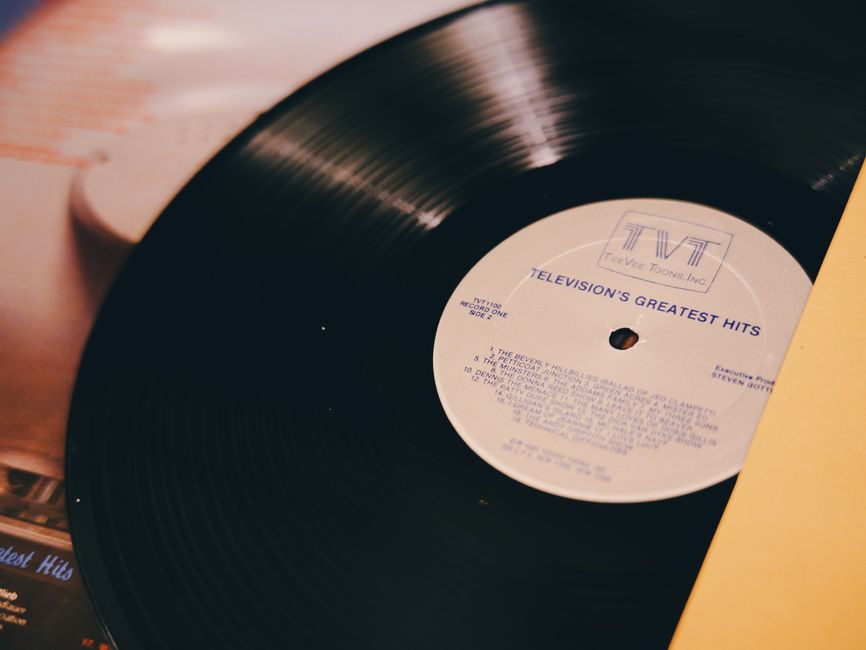
Identify an exact vinyl pressing by documenting the jacket, label, catalog number, barcode, and every deadwax marking on both sides, then matching that full combination to a release listing. Estimate resale value only after the match: compare recent sales for that exact version in comparable media and sleeve condition, not the artist, title, or an asking price.
The useful mindset is simple: a record is not just an album title. It is a specific manufactured object. A familiar cover can hold a later pressing, a swapped disc, or a different issue than the listing a seller has chosen. Slow the process down before money changes hands.
How can I tell whether my record is a first pressing or a reissue?
You can tell only by comparing a complete set of physical details against documented release information; a cover, label, or claimed date alone does not settle the question. Start with a photo set before you search: front and back jacket, spine, both labels, barcode if present, and the runout area on both sides under angled light.
Build an inspection note with the catalog number, label name, label color and design, printing style, barcode, and every visible inscription. The New York Public Library's guide to recordings notes that commercial labels and runout areas can carry publisher, matrix, take, or stamper numbers. It also advises using label design, printing, and signs of an overlaid label alongside runout data, not as isolated proof.
The Match Stack is the practical rule: require the jacket, labels, catalog details, and deadwax to support the same release before calling a copy a first pressing or reissue. A later disc can sit in an older jacket. An older-looking label can still be less conclusive than the full runout. The stronger description is not “original pressing.” It is “matches this documented release because these details align.”
| Inspect | Record | Why it matters |
|---|---|---|
| Jacket and spine | Catalog number, printing details, barcode | Helps narrow the candidate releases. |
| Labels | Catalog number, color, design, typography | Can provide issue-history clues when checked with other evidence. |
| Deadwax on side A and B | Every stamped, etched, crossed-out, or added marking | Identifies each side more precisely than the title alone. |
| Condition | Media grade and sleeve grade separately | Prevents a clean disc or clean cover from masking damage in the other item. |
Use the same discipline applied to other physical collectibles: the asset description must be exact before the price comparison means anything. That is also the central issue in Should I Buy Silver Coins, Bars, or a Silver ETF?, where the form of the item changes the decision. Here, pressing identity changes the comparison set.
What do the numbers and letters in a record's deadwax mean?
The numbers and letters in deadwax can identify a recording side and can include information about takes, pressing batches, or manufacturing, but their meaning depends on the record company and release. Do not translate one label's code system into another label's system by guesswork. Transcribe first; interpret only after finding documentation for the candidate release.
Yale University Library distinguishes the catalog or label number, which generally identifies the entire item, from the matrix number, which identifies each individual side and is usually imprinted in the smooth area between the label and grooves. That creates a clean working split: write down the catalog number once, then capture the complete matrix or runout separately for side A and side B.
Do not omit prefixes, suffixes, letters, dashes, tiny symbols, or a crossed-out number. The Library of Congress explains that, in Victor's system, a full matrix number included a letter prefix, serial number, and take number. It also explains that pressing stampers wore out and could be replaced, so a pressing-related variation is a clue to investigate, not automatic proof of a different original issue.
Weak note: “Side one has 12345.” Strong note: “Side A: all visible characters transcribed in order; side B: all visible characters transcribed in order.” That small upgrade lowers the next person's cognitive load, whether that person is you, a buyer, or a database contributor.
Can I use Discogs matrix numbers to identify my exact vinyl pressing?
Yes, Discogs matrix numbers can help identify an exact pressing when you use them with the labels, catalog details, and jacket rather than as a standalone search term. Search the title and catalog number to find likely releases, then compare each side's full runout against the release notes and images. If one marking differs, keep looking or describe the copy as unresolved.
Once the pressing is matched, move from identification to valuation. Discogs Sales History guidance says each release page calculates low, median, and high values from its 30 most recent sold prices. Those numbers are useful only for that release. They are not a price tag for every record with the same artist and title.
The Price Ladder keeps the decision honest. First, confirm the exact release. Second, grade the media and sleeve separately. Third, look at recent sales for comparable condition. Fourth, compare those results with active listings, which Discogs pricing guidance recommends filtering by factors such as format, condition, and currency. Current listings show competition; sold listings show what buyers actually paid.
Condition is where optimistic estimates fail. Goldmine's grading guide says a VG+ record is generally worth about 50% of Near Mint value, while a VG record generally brings no more than 25%. Goldmine also places Good or Good Plus copies at roughly 10% to 15%, and Poor or Fair copies at 0% to 5%, if they sell at all. Apply that logic to the media, then state the sleeve condition separately rather than letting a sharp cover inflate a worn disc.
A clean listing script is better than a grand claim: “Exact version matched by catalog number, labels, and side A/B runouts. Media graded separately from sleeve. Price based on recent sales of this release in comparable condition.” That gives a buyer the evidence needed to decide and gives a seller a defensible starting point.
Frequently Asked Questions
Are old Beatles and classic-rock records automatically valuable?
No. The RIAA reported that U.S. vinyl revenue grew 7% to $1.4 billion in 2024, showing strong interest in vinyl as a format, but format growth does not make every older copy scarce. Confirm the exact pressing, its condition, and recent comparable sales before assigning a value.
How much does a scratched record or damaged sleeve reduce its value?
Condition can change the price sharply. Goldmine says a VG+ record is generally worth about 50% of Near Mint value, a VG copy no more than 25%, and Poor or Fair copies 0% to 5%; sleeve damage must be graded separately from the record itself. Listen for or disclose audible noise and scratches rather than using a broad condition label.
Should I sell valuable records individually or as a collection?
Sell an individually identified record separately when you can match its exact version and find meaningful recent sales history for it. A collection can be practical when the records cannot be identified or graded efficiently, but grouping can hide the value of a distinct pressing. Start by separating copies with unusual labels, complete deadwax details, or strong release-specific sales evidence.
Run this drill before your next purchase or listing: photograph the four inspection points, transcribe both sides of the deadwax, match the entire evidence set, then check comparable sold copies. If any link in that chain is missing, the right label is not “rare.” It is “not yet identified.”